

The Subaru Ascent is equipped with a sophisticated Supplemental Restraint System (SRS) designed to enhance occupant protection during collisions. However, for the system to perform effectively, it must always be used in conjunction with properly fastened seatbelts. The SRS airbag system in the Subaru Ascent is intended to supplement — not replace — the primary safety provided by seatbelts.
WARNING
- To achieve maximum protection in the Subaru Ascent, the driver and all
passengers must always wear their seatbelts while the vehicle is in motion.
The SRS airbag system is designed only as an additional safety measure and does not eliminate the need for proper seatbelt use.
When used together, seatbelts and SRS airbags provide the highest level of protection in the event of a serious collision.
Failure to wear a seatbelt significantly increases the risk of severe injury or death, even in vehicles like the Subaru Ascent equipped with advanced airbag systems.
- The SRS side airbags and curtain airbags in the Subaru Ascent are also
supplemental safety devices.
They are designed to work together with seatbelts and do not replace them.
Proper seating posture, including sitting upright and correctly positioned, is essential to reduce the risk of injury when airbags deploy.
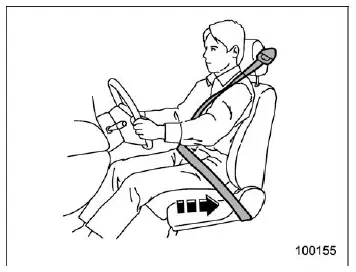
WARNING
The SRS airbags in the Subaru Ascent deploy with significant speed and force. Occupants who are not seated properly in an upright position at the time of deployment may suffer serious injuries.
Because airbags require sufficient space to inflate safely, the driver in the Subaru Ascent should sit upright and as far back from the steering wheel as possible while maintaining full control of the vehicle.
The front passenger should also position the seat as far back as practical and sit upright with their back firmly against the seatback.
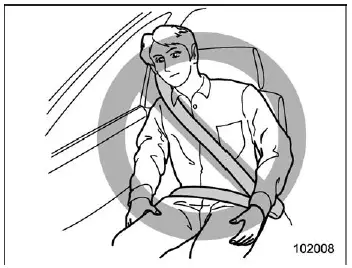
WARNING
- Do not sit too close to the doors in the Subaru Ascent or lean against
them.
The SRS side airbags are integrated into the seatbacks near the doors and deploy rapidly during side-impact collisions.
If an occupant is positioned too close, the force of deployment may cause injury.
- The Subaru Ascent is also equipped with SRS curtain airbags positioned
along the roofline.
Passengers should not lean toward the doors or place any part of their body outside the window.
Curtain airbags deploy quickly during side impacts, rollovers, or offset frontal collisions and provide critical protection for occupants seated correctly inside the vehicle.
Proper understanding and use of the Subaru Ascent SRS airbag system, combined with correct seatbelt usage and seating posture, ensures the highest level of safety for all occupants in every driving situation.
In the Subaru Ascent, the force generated during SRS airbag deployment can cause injury if an occupant is positioned too close to the airbag module.
The airbag system is engineered to deploy rapidly and with considerable force during high-speed collisions in order to provide protection.
If an occupant is too close, the deployment force may result in serious injury. Proper seating position and consistent seatbelt use are essential to minimize these risks.
Even when seated correctly in the Subaru Ascent, minor injuries such as abrasions or bruising to the face or arms may occur due to the impact of airbag deployment.
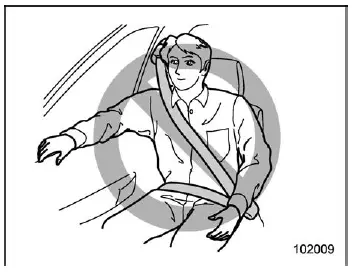
WARNING
- Keep your arms and hands away from the front doors and interior trim
panels in the Subaru Ascent.
In the event of SRS side airbag deployment, these areas expand rapidly and may cause injury if obstructed.
- Do not place any objects on or near the SRS airbag covers in the Subaru
Ascent, and never position objects between yourself and the airbag.
If the airbag deploys, such objects may interfere with proper operation or be propelled into the cabin, potentially causing serious injury.
CAUTION
- When the SRS airbags deploy in the Subaru Ascent, a small amount of smoke
may be released.
This is a normal byproduct of the system activation; however, it may cause temporary breathing discomfort for individuals with asthma or other respiratory conditions.
If breathing difficulty occurs, move to fresh air immediately.
- The SRS airbag system in the Subaru Ascent releases hot gas during deployment.
Direct contact with this gas or nearby components may result in minor burns, so occupants should avoid close proximity to airbag modules.
NOTE
- If you sell your Subaru Ascent, it is important to inform the new owner
that the vehicle is equipped with an SRS airbag system.
Also direct them to the appropriate sections of the Owner’s Manual for complete safety information.
- In the event of SRS airbag deployment in the Subaru Ascent, the fuel supply system is automatically shut off to help reduce the risk of fire in case of fuel leakage.
Understanding and respecting these SRS airbag precautions in the Subaru Ascent ensures safer driving conditions and helps maximize the effectiveness of all integrated safety systems.
Related manual topics
Tire care - maintenance and safety practices
For reliable performance of your Subaru Ascent, inspect the tires ежедневно
or before each drive to ensure they are free from serious damage, embedded objects
such as nails or stones, and any visible defects. At the same time, carefully
examine the tread pattern for signs of uneven or ab ...
Engine compartment overview
Brake fluid reservoir
Fuse box
Windshield washer tank
Battery
Engine oil filler cap
Radiator cap
Engine coolant reservoir
Engine oil filter
Engine oil level gauge
Air cleaner case
The engine compartment of your Subaru Ascent is carefully organized to allow
easy acc ...