
Choose the SUV around the job.
The useful question is not which three-row SUV “wins.� It is which trade-offs fit your winters, passengers, trailer and daily route. Pick a rival, change the priority and watch the comparison rebalance.
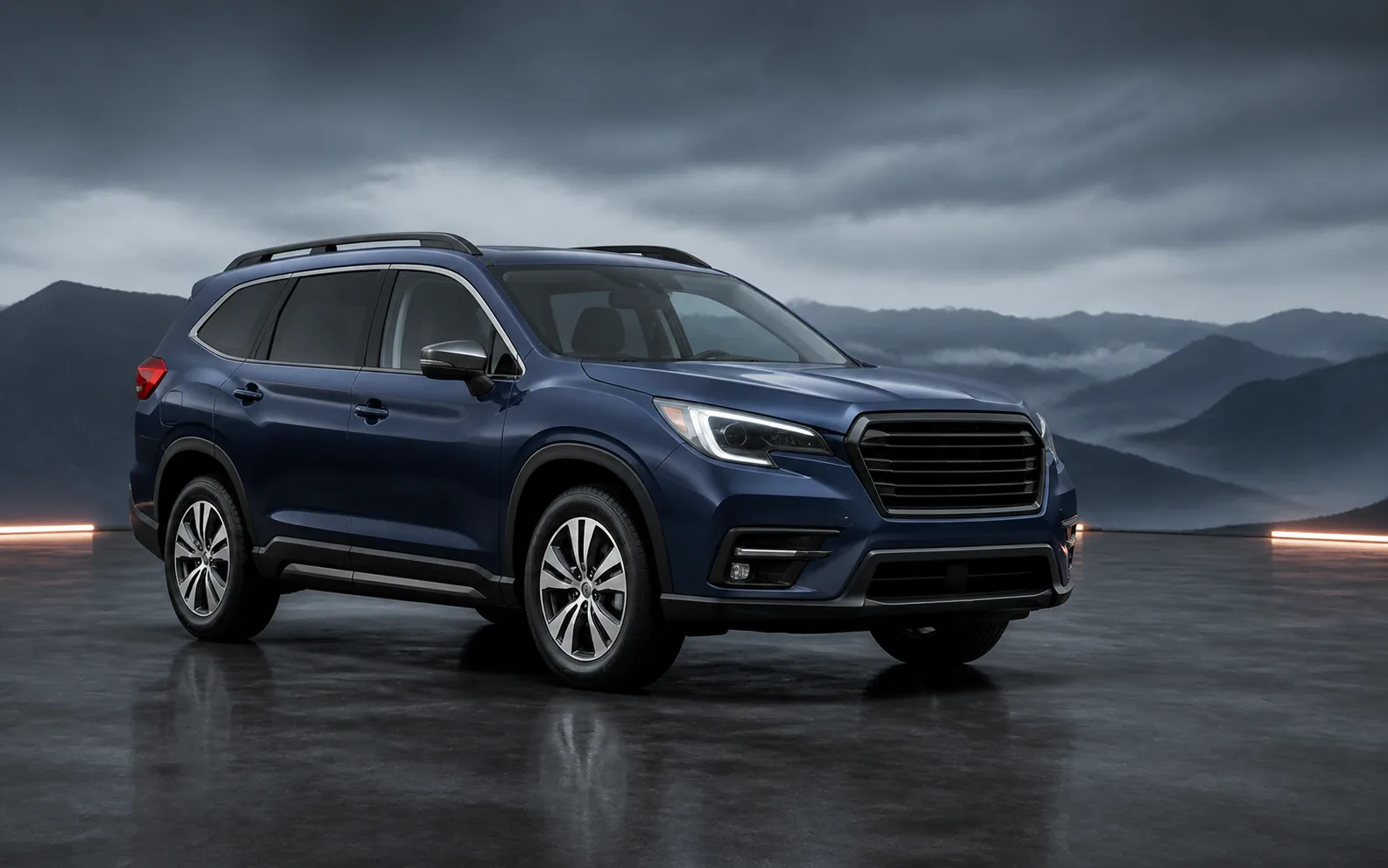
2027 Subaru Ascent
Standard AWD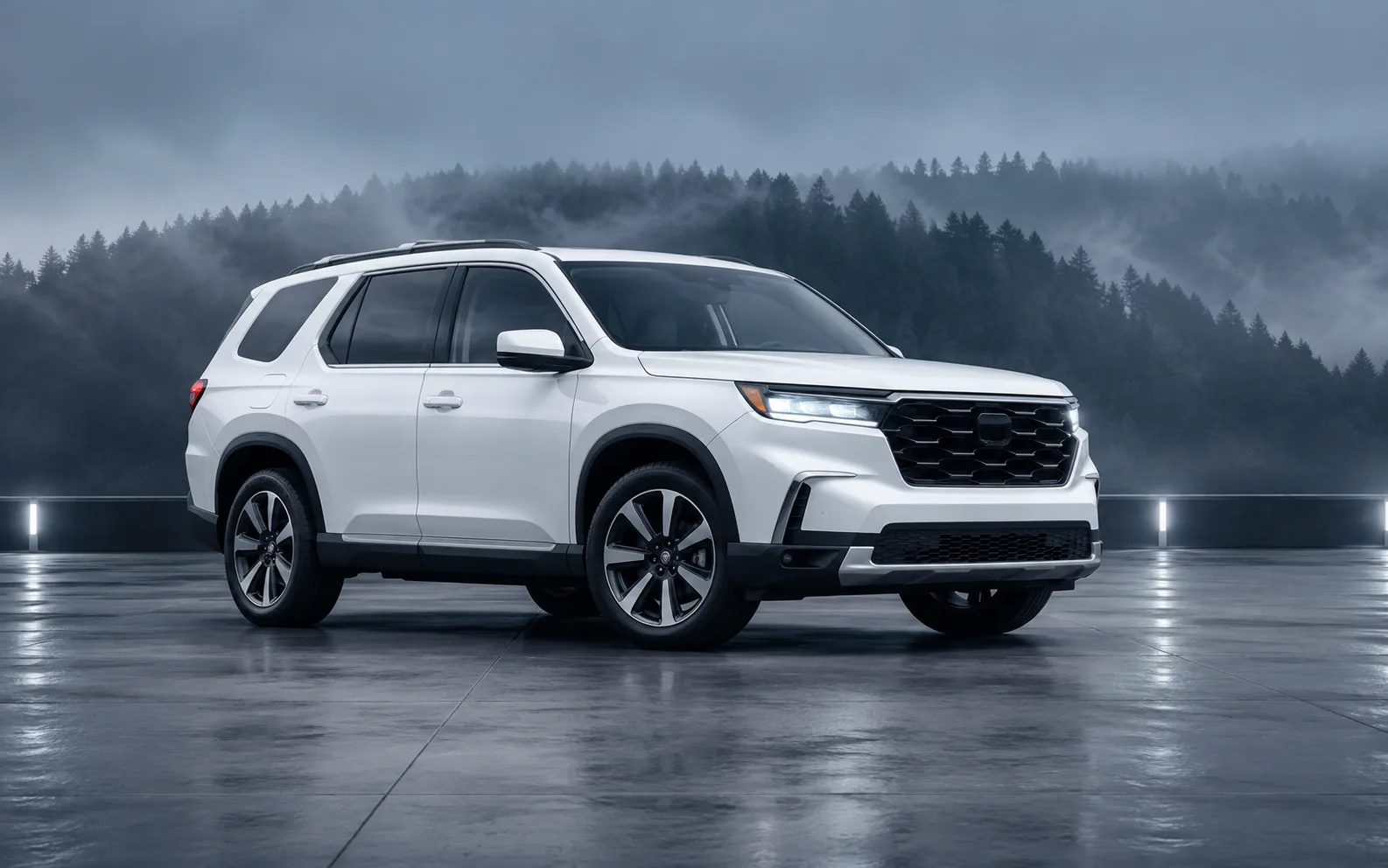
2026 Honda Pilot
V6 · available AWDBalanced choice: two different kinds of confidence
The Ascent makes AWD and one powertrain standard, while the Pilot offers a conventional V6/automatic combination and a broad trim ladder. Drive both with your normal passenger load.
What changes on the order sheet
Figures below describe the current U.S. model lines at publication. Equipment and ratings still depend on trim.
| Model | AWD | Core powertrain | Seats | Max towing | Ground clearance | Hybrid route |
|---|---|---|---|---|---|---|
| 2027 Subaru Ascent | Standard | 260-hp 2.4L turbo / CVT | 7 or 8 | Up to 5,000 lb | 8.7 in | No |
| 2026 Honda Pilot | Available | 285-hp 3.5L V6 / 10-speed | Up to 8 | Up to 5,000 lb with AWD | 7.3 in; 8.3 TrailSport | No |
| 2027 Kia Telluride | Available | 274-hp 2.5L turbo / 8-speed | 7 or 8 | Up to 5,000 lb | 7.4 in; 9.1 X-Pro | Separate hybrid line |
| 2026 Hyundai Palisade | Available | 287-hp V6 / automatic | 7 or 8 | Up to 5,000 lb | Trim dependent | Available |
| 2026 Grand Highlander | Available | Gas, Hybrid or Hybrid MAX | 7 or 8 | Up to 5,000 lb | Powertrain dependent | Available |
Always verify the certification label, current manufacturer specifications and equipment on the exact vehicle. Towing ratings require the proper configuration and do not replace payload, tongue-weight or trailer-brake limits.
Ascent vs. Pilot
The Pilot’s V6 and 10-speed automatic feel familiar and progressive. The Ascent’s turbo four delivers its useful torque earlier, while the CVT keeps engine speed where the load asks for it. Some drivers appreciate that response; others prefer distinct shifts. The deciding drive is a low-speed climb followed by a highway merge with passengers aboard.
The Subaru’s durable advantage is structural: AWD is standard, not a configuration decision. The Pilot’s TrailSport answers with its own terrain-focused setup and 8.3 inches of clearance.
Ascent vs. Telluride
Telluride leans into square styling, cabin presentation and a conventional eight-speed. For 2027 it moves to a turbocharged four-cylinder and offers a more specialized X-Pro with 9.1 inches of clearance. The Ascent remains the simpler all-weather buy: every version starts with AWD and X-MODE.
Compare second-row access with child seats installed, and price equivalent camera, heating and towing hardware rather than matching trim names.
Ascent vs. Palisade
Palisade is the comfort-and-technology counterpoint. Its available hybrid creates an efficiency route the Ascent does not offer; the gas version reaches the same headline 5,000-pound maximum when properly equipped. Subaru’s case is a consistent drivetrain and familiar control logic across a shorter range.
Spend time in the third row and test the camera views at night. Those daily details are more useful than counting decorative features.
Ascent vs. Grand Highlander
Grand Highlander is the strongest alternative when maximum cabin packaging or a hybrid matters most. Its multiple powertrains also make the buying process more complex. Ascent buyers accept one engine in exchange for standard AWD, predictable equipment logic and a more compact decision tree.
Load the exact stroller, cooler or sports cases you own. Published cargo volume cannot tell you whether awkward items clear the opening.
Four checks that expose the real differences
- Bring the load.Install your child seats, open the third row and place the weekly gear behind it.
- Repeat one route.Use the same rough street, parking maneuver, merge and grade in every vehicle.
- Price one equipment set.Match AWD, cameras, heated seats, roof hardware and towing equipment—not badges.
- Read beyond the brochure.Check payload, tire specification and operating procedures before signing.