
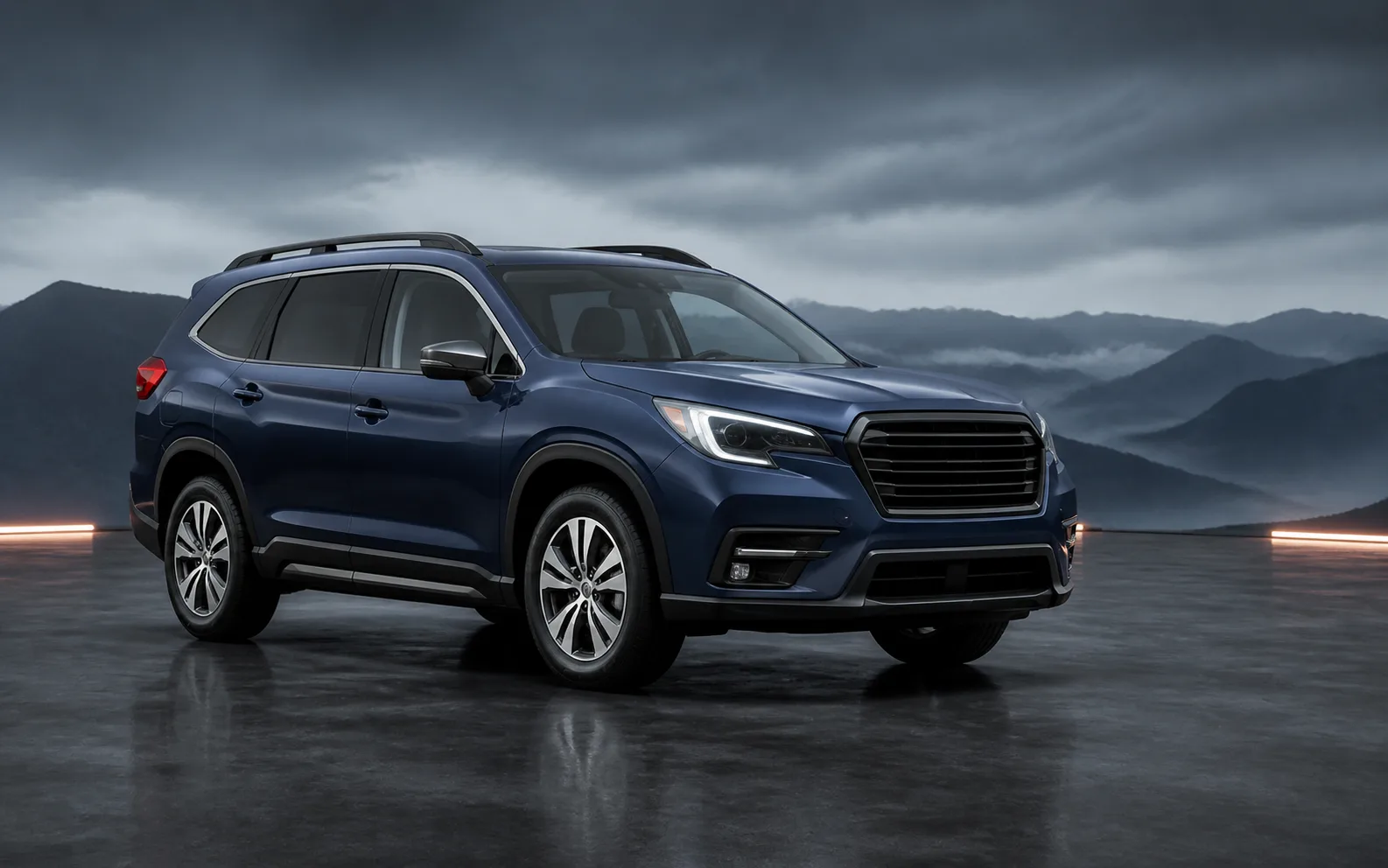
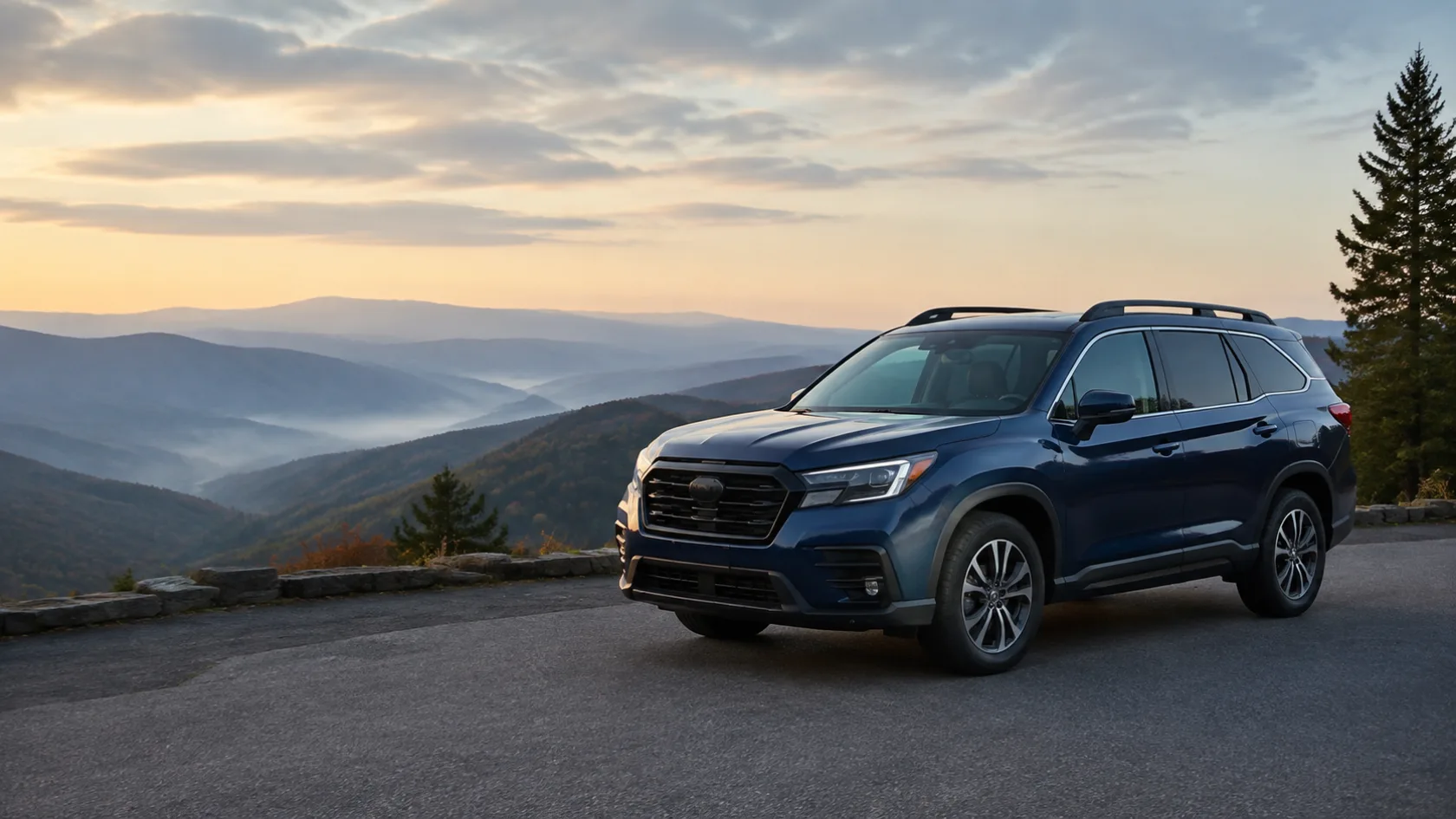
A family SUV with one clear point of view.
The Ascent is not the roomiest, quickest or most efficient three-row crossover. Its strength is coherence: standard AWD, useful clearance, a torque-rich engine and a cabin that asks little of a new driver.
owner score
The shortlist case
Choose the Ascent when winter traction, ground clearance and a consistent equipment story matter more than having several engines to choose from. Its 260-hp turbo flat-four is strong in the middle of the rev range, and every trim starts with Symmetrical AWD and X-MODE.
Look elsewhere first if a hybrid is non-negotiable, if adults will occupy the third row every day, or if you strongly prefer the stepped shifts of a conventional automatic. Those are not minor details; they are the major dividing lines in this class.
What works
- AWD and 8.7-inch clearance are standard
- Strong 277 lb-ft torque delivery
- Useful seven- or eight-seat configurations
- Good visibility and understandable controls
- Up to 5,000 lb towing when properly equipped
What to accept
- No hybrid powertrain
- CVT behavior is not for every driver
- Third-row and cargo packaging are not class-leading
- Large touchscreen concentrates many functions
- Real fuel economy depends heavily on load and speed
Calm first, quick enough second
The 2.4-liter direct-injection turbocharged BOXER engine produces 260 hp and 277 lb-ft of torque. The number that shapes normal driving is torque, not horsepower: useful pull arrives without a dramatic downshift, so the Ascent can merge or climb with a full cabin without feeling strained.
The Lineartronic CVT is central to the experience. In gentle driving it keeps engine speed low and removes shift shock. Under a heavy request it can hold a steady engine note longer than a conventional automatic. Simulated ratios add familiar steps, but anyone sensitive to CVT behavior should test the vehicle on a grade rather than during a flat ten-minute dealer loop.
Ride, steering and braking
The suspension is tuned for control rather than float. The body settles quickly after a long highway undulation, yet broken urban pavement still reaches the cabin on larger wheels. Steering is light at parking speeds and stable on center. Braking response is progressive enough for smooth passenger comfort, though a loaded vehicle naturally needs more distance.
Capability is built into the base vehicle
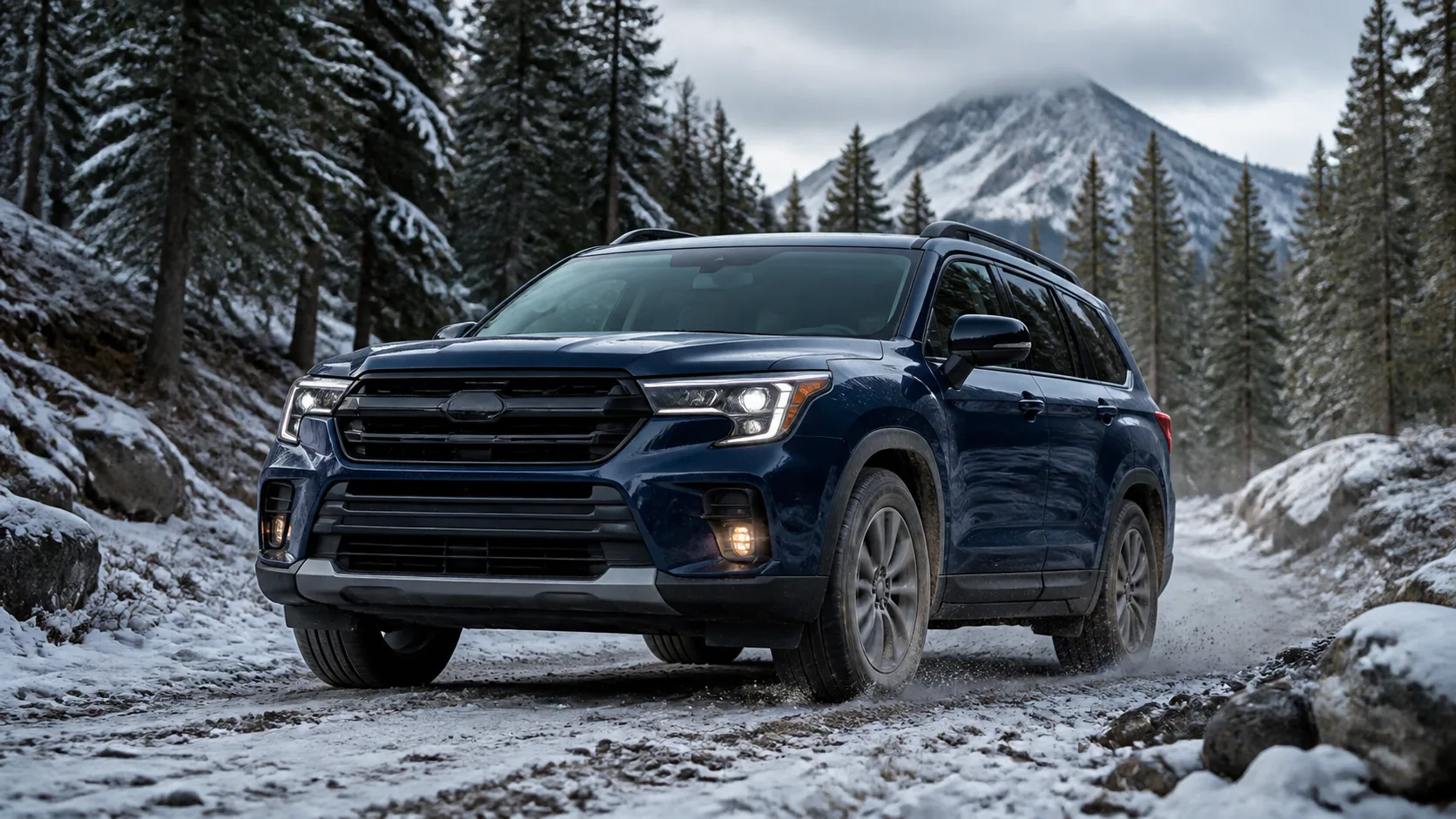
Every 2027 Ascent uses Symmetrical All-Wheel Drive and offers 8.7 inches of ground clearance. That consistency matters: buyers do not have to decode a front-drive base version or a separate AWD fuel-economy branch.
X-MODE coordinates throttle, CVT, AWD and brake control for low-speed slippery conditions. Higher trims add dual-function logic for different surfaces. It is most useful when careful inputs alone are not keeping wheelspin under control—not as an everyday “sport� setting.
The Ascent remains a crossover, not a rock crawler. Its length, road tires, overhangs and underbody exposure set sensible boundaries. On snow, tires often create a larger real-world difference than another drive-mode label.
Read the full X-MODE procedure →Designed around a changing passenger list
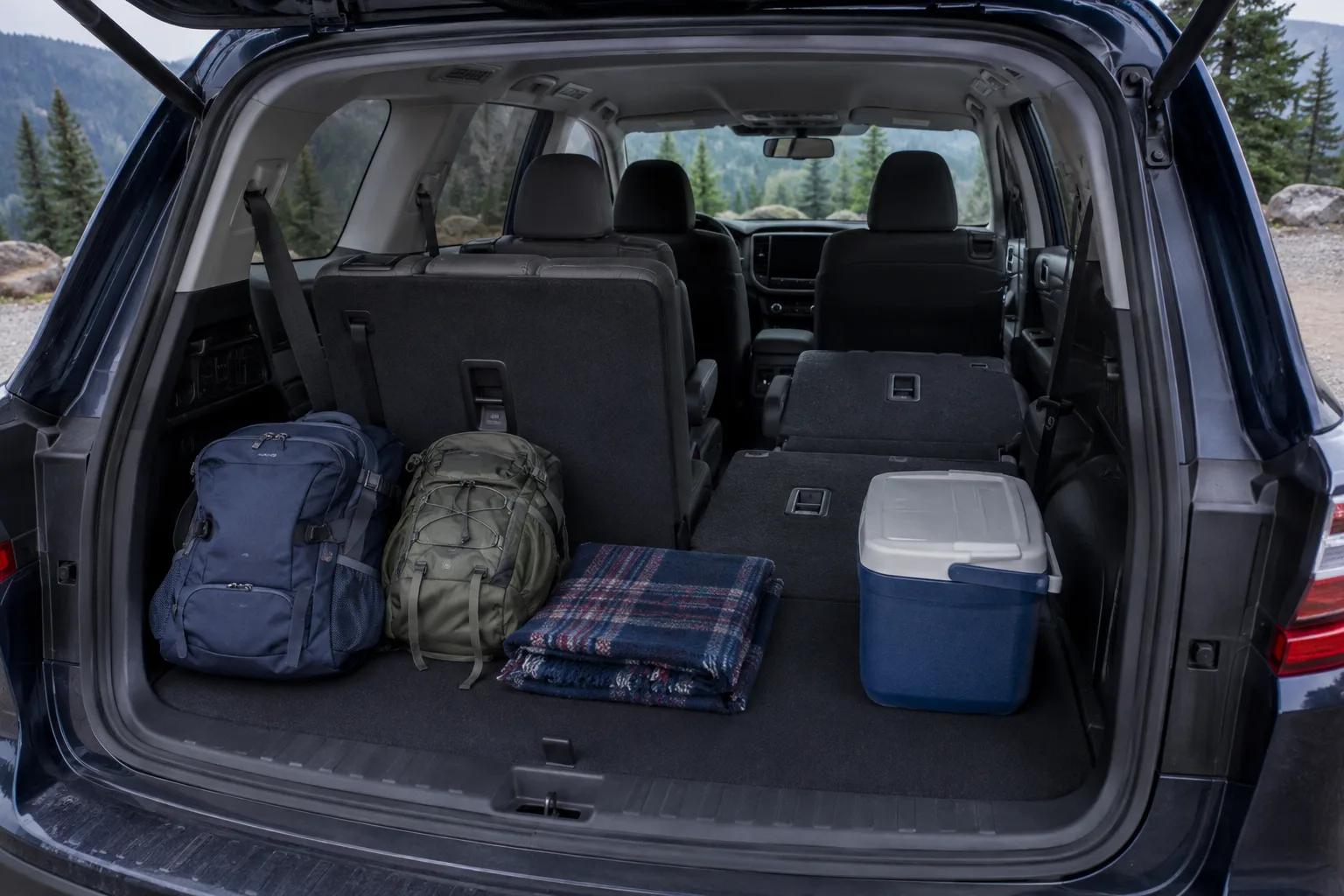
The 2027 Ascent offers seven seats with second-row captain’s chairs or eight with a bench. The captain’s-chair layout makes third-row access easier and separates siblings; the bench preserves a middle position and can be better for families that regularly need five seats without opening row three.
Subaru publishes 153.2 cu ft of passenger volume and up to 75.6 cu ft of cargo room. The maximum is less important than the shape behind the raised third row. The floor is usable and the opening is broad, but a stroller plus a full set of passengers still requires planning.
The details owners notice
- Wide-opening rear doors help with child-seat loading.
- Physical steering-wheel and climate shortcuts reduce menu hunting.
- Multiple cupholders and charging points suit long family trips.
- A power rear gate is convenient, but memorize its height only after checking garage clearance.
- Long objects and loose luggage need proper restraint, even when they fit.
One large interface, backed by useful assistance
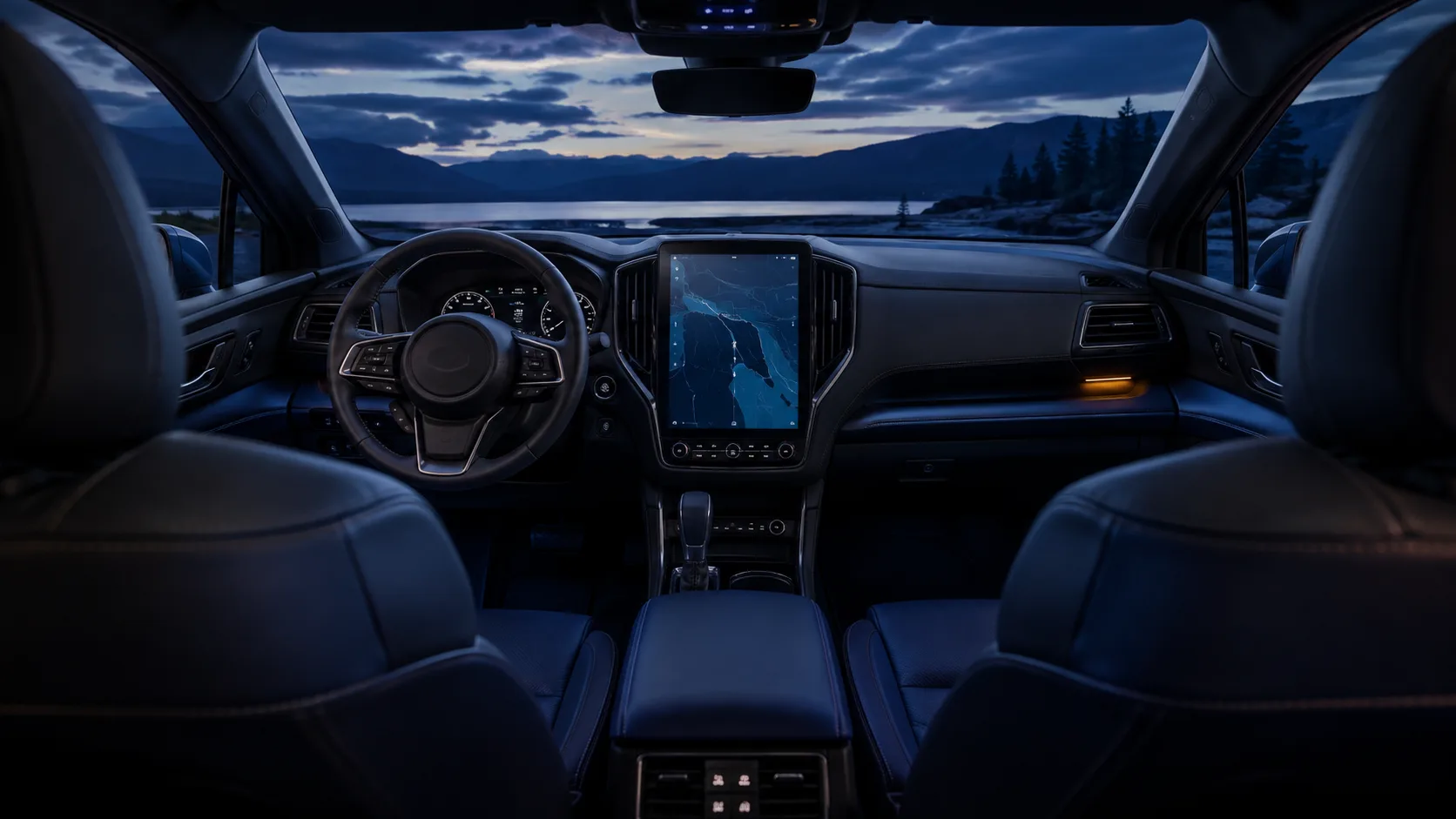
The standard 11.6-inch portrait touchscreen includes wireless Apple CarPlay and Android Auto. Its size gives maps useful area, but it also absorbs controls that some drivers would prefer as dedicated switches. Pair the phone, set shortcuts and reduce notifications before the first long trip.
EyeSight driver-assistance technology is standard. Blind-spot detection with rear cross-traffic alert and Reverse Automatic Braking are also standard for 2027; a 360-degree Surround View Monitor is available higher in the range. These systems are most valuable when the driver knows both the activation cues and the conditions that can suspend them.
Five versions, one powertrain
The right trim is the lowest one that includes the equipment you will use weekly. Availability can change, so verify the current order guide.
Premium
The value anchor. Start here if the core AWD, safety and multimedia package matters more than appearance upgrades.
Best for: practical eight-seat useLimited
Adds comfort and convenience equipment that many families actually touch every day. Compare wheel and seating packages carefully.
Best for: balanced ownershipLimited Bronze Edition
A style-led Limited variation. Judge it on desired equipment and total transaction price, not the badge alone.
Best for: distinctive appearanceTouring
The luxury-leaning specification, aimed at buyers who want the broadest comfort and camera technology without leaving the Ascent platform.
Best for: long-distance comfortOnyx Edition Touring
Top equipment with a darker visual treatment. It makes sense when both the Touring feature set and the appearance package are priorities.
Best for: equipment plus styleThe first 12 months matter more than the first 12 minutes
Confirm seating layout, tire specification, spare equipment, hitch hardware and every promised accessory. Photograph the certification and tire labels.
Vary engine speed, avoid unnecessary high loads and follow the break-in guidance. Learn the displays before changing driver-assistance settings.
Check cold tire pressure, fluid levels, lights, wipers and cargo restraints. A consistent five-minute routine catches trends before warnings.
Calculate payload and tongue weight with people and cargo included. Inspect the hitch, chains, connector, tires and trailer brakes as one system.
Specifications and standard-feature statements reflect Subaru’s published U.S. information for the 2027 Ascent at the time of writing. This is an independent editorial assessment; verify trim, market and vehicle-specific labels before purchase or operation.