
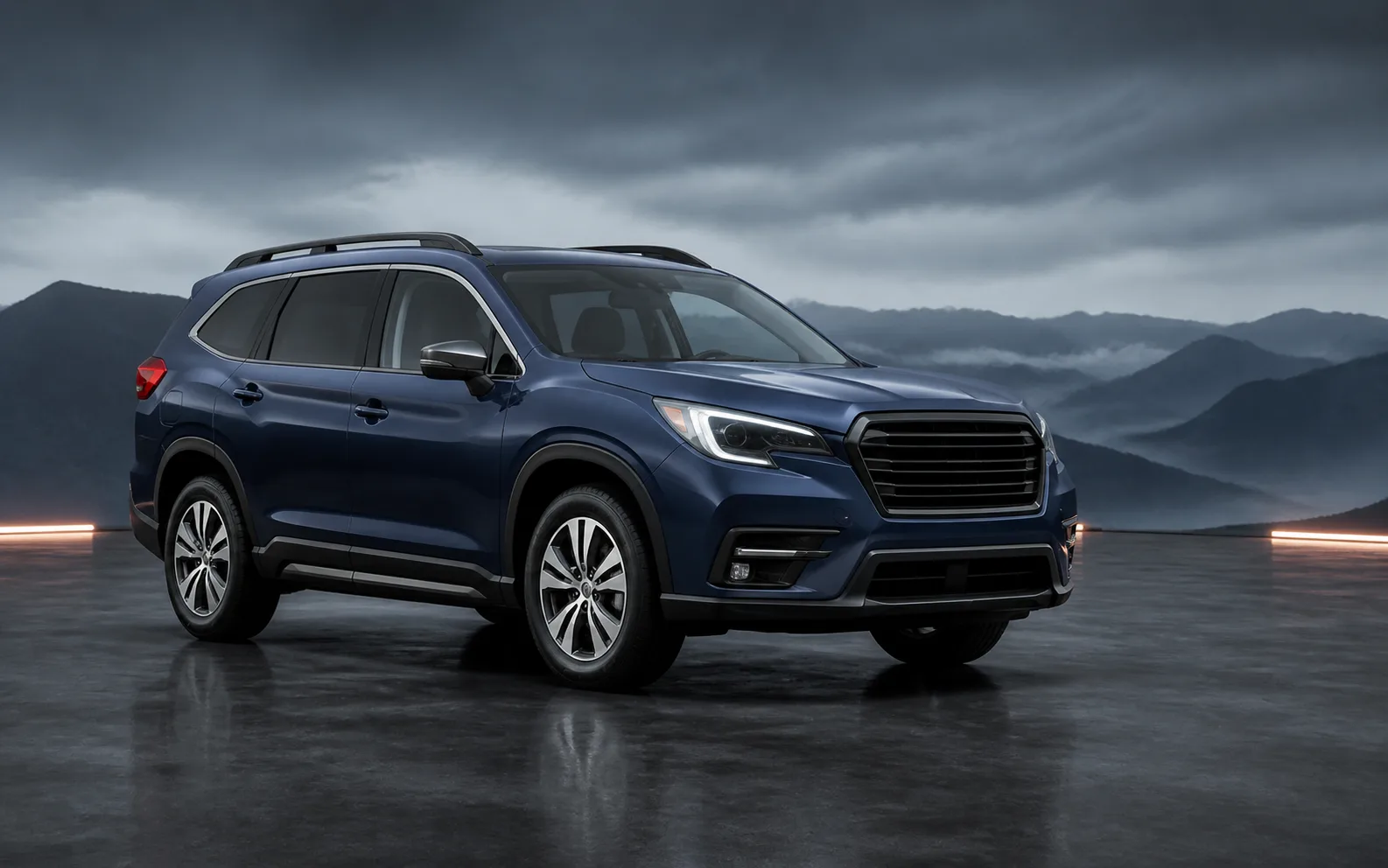
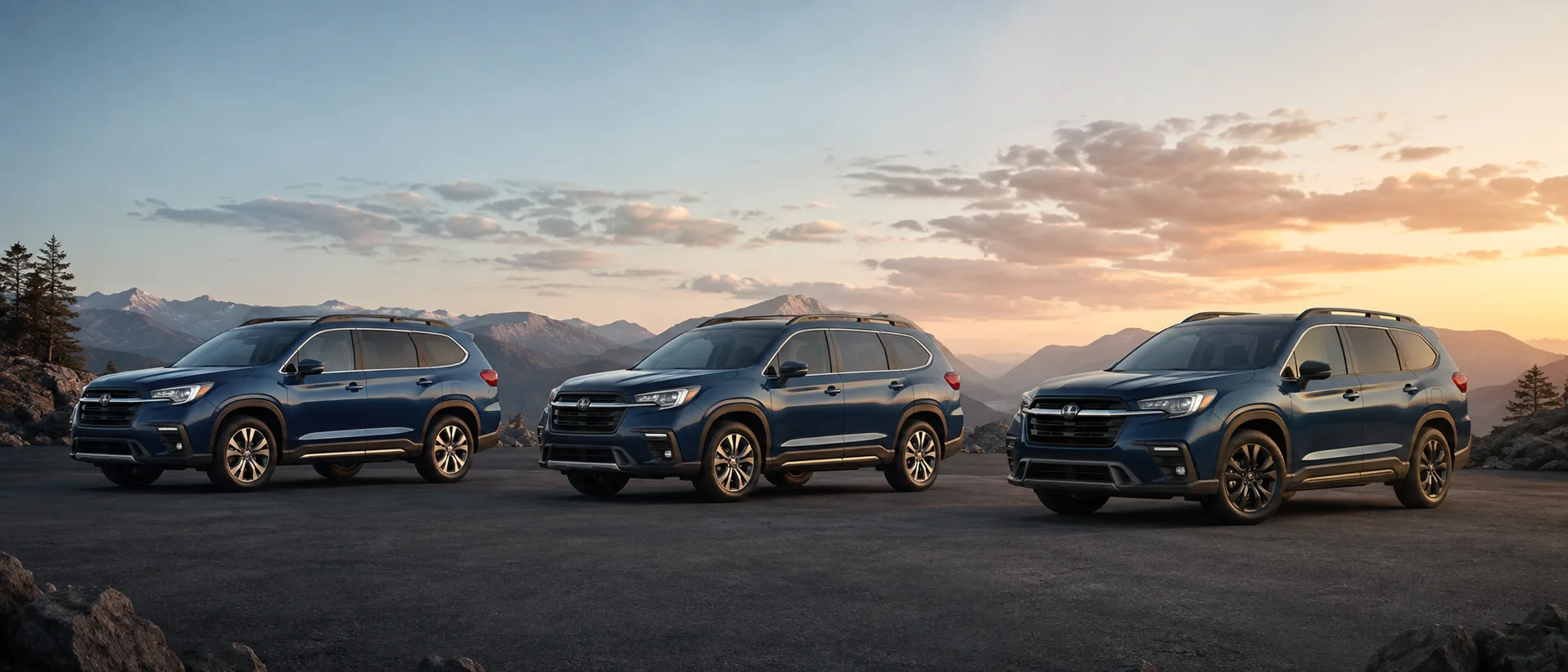
How the Ascent grew up without changing its brief.
The nameplate arrived for 2019 as Subaru’s answer to the North American three-row family SUV. The structure and turbo/AWD formula have remained remarkably consistent; safety, multimedia and trim strategy did most of the evolving.
From Tribeca gap to family flagship
Subaru had been without a three-row model after the Tribeca left the U.S. range. The Ascent was not conceived as a stretched Forester. It arrived on the Subaru Global Platform, was built in Indiana and paired three usable rows with the brand’s standard-AWD identity.
The original engineering recipe still defines the 2027 vehicle: a 2.4-liter direct-injection turbocharged flat-four, Lineartronic CVT, Symmetrical AWD, up to eight seats and a properly equipped 5,000-pound towing ceiling. That continuity is helpful for understanding the model, but it does not make every control or manual page interchangeable.
A new flagship, built around one drivetrain
Subaru revealed the production Ascent in late 2017 and launched it as a 2019 model. Rather than offer front-drive and multiple engines, it established one mechanical baseline: turbo BOXER power, a CVT and standard AWD. Seven- and eight-passenger layouts let the same vehicle serve different family arrangements.
First production year
The full architecture arrives: three rows, standard EyeSight, 8.7-inch ground clearance and up to 5,000 lb towing on properly equipped versions. Early vehicles deserve careful service-history and campaign checks, as any first-year model does.
Convenience refinement
The second year focuses on smaller ownership details rather than structural change. Rear-seat reminder and revised cabin convenience equipment make the original package easier to live with.
The core engine, AWD layout, seating concept and main body structure establish the template still recognizable in 2027.
More safety coverage, then a tougher visual branch
These years are best understood as maturation. The vehicle’s fundamentals stay put while driver assistance and trim identity broaden. For used buyers, exact build and equipment matter more than a generic “pre-refresh� label.
Safety and equipment evolution
EyeSight and convenience equipment continue to develop within the existing cabin and dashboard architecture. Interface details remain closer to the launch vehicles than to the 2023 refresh.
Onyx Edition arrives
The Onyx Edition introduces a blacked-out, more outdoors-oriented presentation and water-repellent StarTex upholstery. It creates a visual/cabin branch without changing the one-engine strategy.
Do not assume a trim name guarantees every camera or comfort feature. Decode the actual VIN/build, inspect tires as a matched AWD set and verify completed recalls.
The change you can see—and the technology change you feel
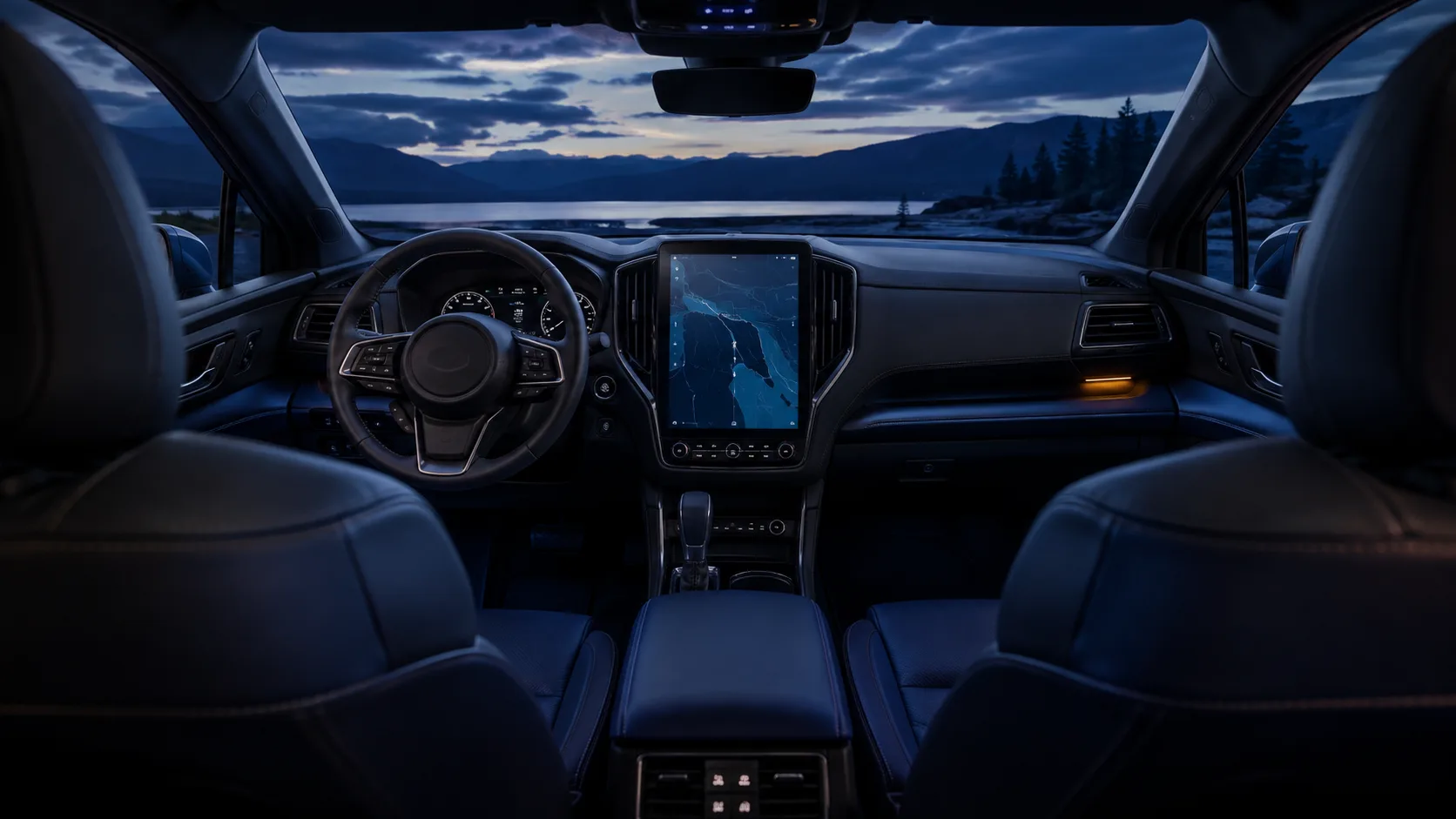
The 2023 model is the clear dividing line in first-generation Ascent history. Subaru revised the front and rear styling, upgraded EyeSight hardware and reorganized the cabin around a vertically oriented 11.6-inch multimedia display. Wireless Apple CarPlay and Android Auto became part of the updated interface story.
Exterior, EyeSight and multimedia refresh
A redesigned nose and rear treatment make the update visible. New camera and assistance capabilities, the large center display and Cabin Connect on equipped trims make the change more substantial than a cosmetic facelift.
Refinement, not reinvention
The refreshed formula carries forward. For shoppers, the task is less about 2023 versus 2024 and more about trim, seating layout, tire condition, software behavior and documented maintenance.
New identities around proven hardware
The later years do not introduce a second-generation vehicle. Instead, Subaru reshapes the range and increases standard content while preserving the 260-hp turbo engine and AWD/CVT foundation.
Bronze Edition and Onyx Touring
A Bronze Edition adds distinctive 20-inch bronze-finish wheels and coordinated accents, while Onyx Edition Touring combines the dark appearance theme with top-tier equipment. These are meaningful packaging changes, not mechanical redesigns.
Continuity year
The refreshed first-generation formula continues. For manual compatibility, match the publication to the vehicle rather than assuming a visually similar 2025 procedure is identical.
Five-trim, high-content lineup
Premium, Limited, Limited Bronze Edition, Touring and Onyx Edition Touring form the U.S. range. The 11.6-inch system, wireless phone integration, power rear gate, blind-spot/rear cross-traffic alerts and Reverse Automatic Braking are part of the standard-feature story.
260 hp · 277 lb-ft · standard AWD · 8.7-inch clearance · seven or eight seats · up to 5,000 lb towing when properly equipped.
Which years feel alike?
| Area | 2019–2022 | 2023–2027 | Owner implication |
|---|---|---|---|
| Body & platform | Original first-generation form | Same generation, refreshed ends | Many broad dimensions and concepts carry over; exterior parts do not automatically interchange. |
| Powertrain | 2.4L turbo / CVT / AWD | 2.4L turbo / CVT / AWD | Continuity does not replace year-specific fluid, calibration or service information. |
| Multimedia | Earlier screen architecture | 11.6-inch portrait architecture | Pairing, menus and troubleshooting differ substantially. |
| Driver assistance | Earlier EyeSight generation | Updated camera/safety suite | Controls, indicators and limitations must match the year and equipment. |
| Trim identity | Original trims; Onyx joins for 2022 | Refreshed trims; Bronze and Onyx Touring later | Trim names and feature bundles change more than the underlying drivetrain. |
2018–2026 owner’s-manual library
The library covers the manual publication range already parsed on this site. Use the chapter tree for operating instructions, warnings, maintenance and specifications. A workshop-oriented service manual is planned as a separate future section.
Timeline dates refer to U.S. model years. Major change points were checked against Subaru model materials and release information; running changes, market equipment and dealer-installed accessories can create exceptions.