
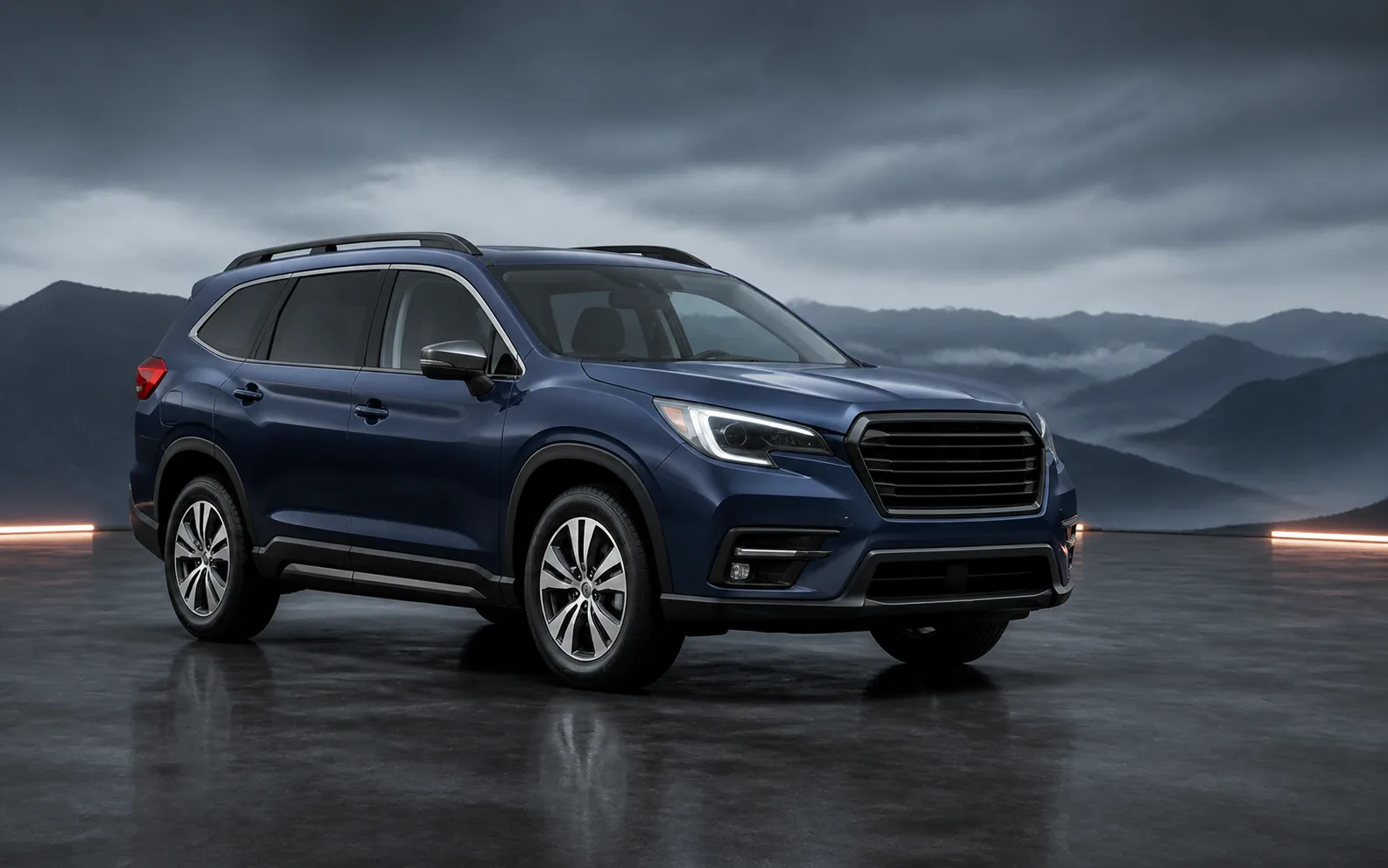
The Subaru Ascent is equipped with a comprehensive seatbelt system designed to provide maximum protection for all occupants. Proper use of seatbelts in the Subaru Ascent significantly reduces the risk of injury in the event of sudden braking or a collision.
WARNING
- All occupants in the Subaru Ascent must fasten their seatbelts before the vehicle begins to move. Failure to do so greatly increases the risk of serious injury in an accident.
- Ensure that all seatbelts fit snugly against the body. Loose belts reduce the effectiveness of restraint and may not provide adequate protection.
- Each seatbelt in the Subaru Ascent is designed for use by one person only. Never share a seatbelt between multiple occupants, including children, as this can result in severe injury or death.
- If the Subaru Ascent has been involved in a serious accident, replace all seatbelt assemblies, including retractors and mounting hardware, even if no visible damage is present.
- Never use a seatbelt that is twisted or improperly routed, as this may increase injury severity during a collision.
- Always position the lap belt as low as possible across the hips. This allows impact forces to be absorbed by stronger pelvic bones rather than the abdomen.
- Seatbelts provide optimal protection when the occupant sits upright with
their back against the seatback.
To minimize the risk of sliding under the belt in a collision, always keep the seatback in an upright position while driving the Subaru Ascent.
If the seatback is reclined during an accident, the lap belt may shift upward over the abdomen, increasing the risk of serious internal injuries or death.
- Do not place cushions or other materials between the occupant and the
seat.
Improper positioning can lead to incorrect seatbelt alignment and significantly increase injury risk during impact.
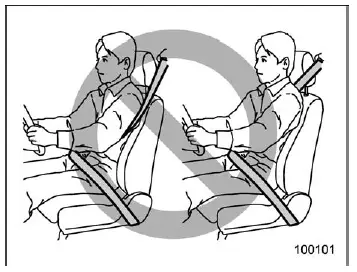
WARNING
Never route the shoulder belt under the arm or behind the back. In the Subaru Ascent, improper positioning of the shoulder belt can greatly increase the risk and severity of injuries in an accident.
CAUTION
Seatbelt metal components in the Subaru Ascent may become extremely hot when the vehicle is exposed to direct sunlight for extended periods. Avoid contact until they have cooled to prevent burns.
The Subaru Ascent is equipped with a crash sensing and diagnostic module that records seatbelt usage for the front passenger when SRS airbags are deployed. This data helps improve safety system performance and diagnostics.
Infants or small children
Always use an appropriate child restraint system designed for use in the Subaru Ascent to ensure maximum safety for infants and small children.
Children
WARNING
Children must always be seated in the rear seats of the Subaru Ascent and properly restrained. The SRS airbag system deploys with significant force and may cause severe injury or death to improperly restrained children.
All child restraint systems, including forward-facing seats, must be securely installed in the rear seats at all times.
NEVER INSTALL A CHILD RESTRAINT SYSTEM IN THE FRONT PASSENGER SEAT OF THE SUBARU ASCENT, AS THIS CAN RESULT IN SERIOUS INJURY OR DEATH DUE TO AIRBAG DEPLOYMENT.
Statistics show that children are significantly safer when properly restrained in rear seating positions.
For detailed installation and safety instructions, refer to the "Child restraint systems" section.
The Subaru Ascent crash sensing system records seatbelt usage during airbag deployment events to improve safety monitoring.
If a child is too large for a child restraint system, they should sit in the rear seat of the Subaru Ascent and use a properly adjusted seatbelt.
Never allow a child to stand or kneel on the seat while the vehicle is moving.
If the shoulder belt crosses the child’s face or neck, reposition the child closer to the buckle to improve fit. Ensure the lap belt sits low on the hips and not on the waist. If proper positioning cannot be achieved, use a suitable child restraint system. Never place the shoulder belt under the child’s arm or behind their back.
Expectant mothers
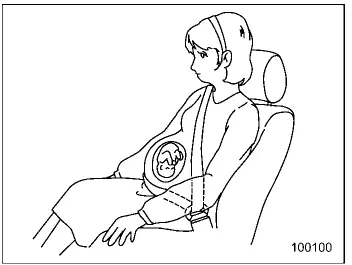
Expectant mothers should always use seatbelts in the Subaru Ascent and consult their healthcare provider for specific guidance. The lap belt should be worn securely and positioned as low as possible over the hips, never across the abdomen.
Emergency Locking Retractor (ELR)
The Subaru Ascent driver's seatbelt is equipped with an Emergency Locking Retractor (ELR) system.
This system allows normal movement during regular driving conditions but automatically locks the seatbelt during sudden stops, impacts, or rapid pulling, ensuring immediate restraint and enhanced occupant protection.
The seatbelt system in the Subaru Ascent is a critical safety component, and proper usage at all times is essential for protecting all occupants during every journey.
Related manual topics
Shift lock function
The shift lock mechanism in the Subaru Ascent is designed to enhance safety by
preventing unintended or incorrect operation of the select lever. This system ensures
that gear changes occur only under appropriate conditions.
In the Subaru Ascent, the select lever can only be operated when the ...
Surround View Monitor
The Subaru Ascent is equipped with a Surround View Monitor system that provides
a comprehensive visual overview of the vehicle’s surroundings. This system displays
real-time camera images on the center information display, helping the driver monitor
blind spots and improve situational awarenes ...